
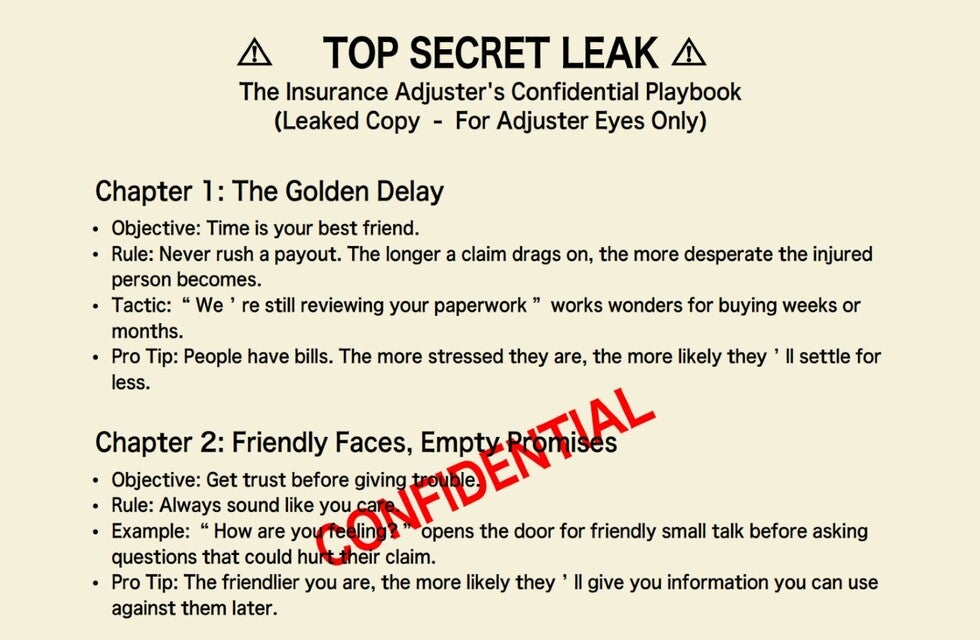
After a serious injury, one of the first calls many people receive is from an insurance adjuster. The tone is friendly, the questions sound casual, and the message is simple. The adjuster says they want to help you move forward. What most people do not hear is the part about protecting the insurer's bottom line. That is the real job. Our team at Greenberg & Ruby Injury Attorneys has seen the same patterns repeat across thousands of claims, which is why we created an educational “playbook” you can download above to showcase common tactics in a clear, memorable way.
1. The Golden Delay
How it works: Time pressure moves money. Adjusters know that delayed claims place stress on injured people who are facing medical bills, missed work, and everyday expenses. Delays often hide behind lines like, “We are still reviewing your paperwork,” or “We are waiting on one more item.”
Why it happens: When pressure builds, early low offers begin to look reasonable. Insurers benefit if you accept less than the full value of your claim.
What you can do: Track every request, every submission, and every conversation. Keep a log with dates, times, and names. If delays continue, your attorney can escalate and set enforceable deadlines.
2. Friendly Faces, Empty Promises
How it works: Adjusters open with rapport. They ask how you are feeling, they use first names, and they present themselves as problem solvers. This can lower your guard and lead to statements that later reduce the value of your claim.
Why it happens: The more you talk, the more opportunities there are to create doubt about the severity of your injuries or the cause of the accident.
What you can do: Be courteous, then keep it brief. You do not have to discuss symptoms, treatment plans, or pain levels. You can refer the adjuster to your attorney once you hire one.
3. Recorded Statements and Tricky Questions
How it works: Many adjusters request recorded statements early in the process. Questions sound simple. Answers can be used to create inconsistencies, even if your memory improves later with rest and medical clarity.
Why it happens: The insurer wants to limit liability and pay less. A single unclear answer can be used against you.
What you can do: You do not have to give a recorded statement. Speak with an attorney first. If a statement is necessary, your lawyer can prepare you and be present.
4. The Quick Cash Offer
How it works: When liability looks unfavorable for the insurer, a fast settlement may appear. The number is usually low, but the timing is attractive. Quick cash can be tempting when bills are due.
Why it happens: Early offers often arrive before the full scope of injury is known. If you accept and sign a release, you cannot reopen the claim later even if new complications arise.
What you can do: Do not accept the first offer without a full evaluation of your medical needs, wage loss, and future care. A lawyer can calculate a fair range and push negotiations toward it.
5. The Missing Paperwork Routine
How it works: Requests come one document at a time. Weeks pass between emails. Occasionally a file goes missing. The result is a stretched timeline that makes you more likely to compromise.
Why it happens: A slow process increases the odds of a cheap settlement.
What you can do: Send documents by trackable methods, keep copies, and maintain a submission log. If the process stalls, your attorney can set expectations and enforce reasonable timelines.
6. Downplaying Your Damages
How it works: An adjuster may argue that your treatment was unnecessary or too expensive. They may suggest that your symptoms come from a prior issue rather than this accident.
Why it happens: Medical expenses anchor negotiations. Lower bills mean a lower overall valuation.
What you can do: Ask your providers to clearly document the link between the incident and your injuries. An attorney can obtain expert opinions and present a strong medical narrative that supports your recovery.
7. Divide and Conquer
How it works: You may hear, “You do not need a lawyer. Lawyers only take a cut.” The goal is to keep you isolated from advice that raises the value of your case.
Why it happens: Data shows that represented claimants often recover more, even after legal fees.
What you can do: At least speak with a trusted injury lawyer for a free review. A clear strategy can increase your net recovery and reduce stress.
8. The Final Move
How it works: Even after an agreement, payment can be slow. You might hear about final checks and final reviews.
Why it happens: Holding funds preserves cash for the insurer.
What you can do: Your attorney can press for timely payment and pursue penalties where the law allows.
How to Protect Yourself Right Now
- Get immediate medical care and keep all records
- Document the scene and your injuries
- Do not post about the incident on social media
- Be cautious with adjuster calls
- Track all claim activity
- Contact an injury lawyer early
Why Greenberg & Ruby Makes a Difference
Insurance companies respond differently when they face a prepared legal team. Our firm builds the case from the start, preserving evidence and creating a clear story of how the incident happened and how it changed your life. We negotiate firmly and try cases when necessary. Our results include seven and eight figure outcomes in significant injury matters.


Comments
There are no comments for this post. Be the first and Add your Comment below.
Leave a Comment