
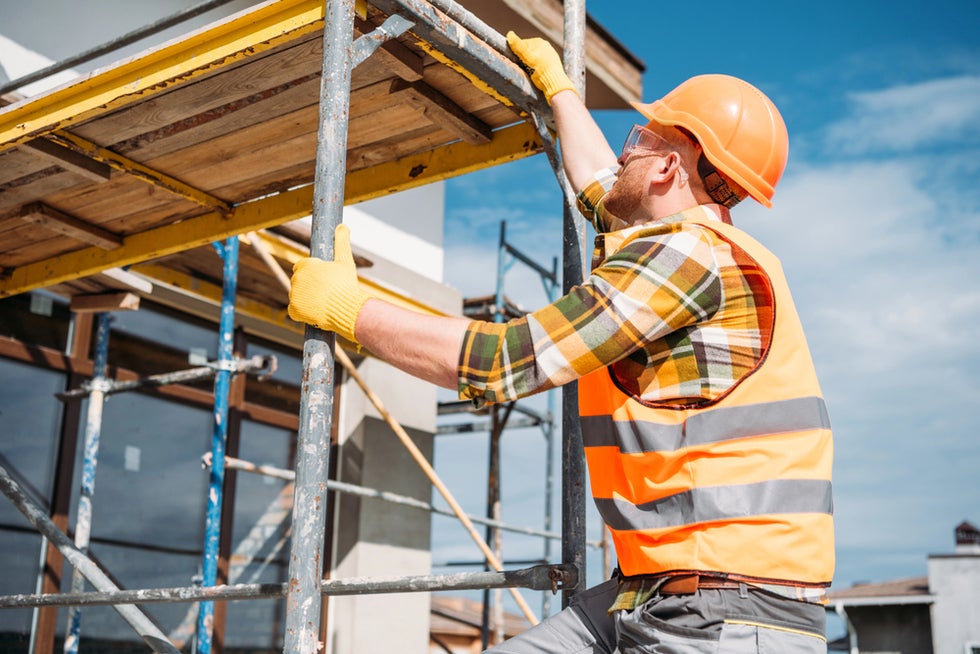
Five men were injured after scaffolding and large display screens collapsed during preparations for an event at Summit Skywalker Ranch in Marin County, California, on September 7, 2026.
Emergency crews were dispatched to the property at approximately 11:23 a.m. after receiving an initial report that three people were trapped beneath a stage. The collapse occurred in an upper campus area while the site was being prepared for an event. Three of the five injured men were transported to local hospitals, including one who suffered a serious head injury.
Another person was trapped beneath LCD screens following the collapse. Firefighters used airbags to raise the fallen structure and free him. He was treated at the scene and released. Fire crews from Marin County, San Rafael and Novato responded, and the emergency response concluded shortly after 1:30 p.m.
The California Division of Occupational Safety and Health, commonly known as Cal/OSHA, is investigating what caused the scaffolding and screens to collapse. As of September 9, no cause has been publicly identified.
For attorneys who handle serious workplace injury cases, an accident like this raises questions that extend far beyond the initial determination that a piece of scaffolding failed. The legal investigation may eventually involve the companies responsible for erecting the structure, the contractors using it, the equipment itself, the people responsible for the event setup and potentially the entity that controlled the property or worksite.
At this stage, however, those are questions rather than conclusions. The publicly available information does not establish who erected the scaffolding, who owned the equipment, which companies employed the injured men or what specifically caused the collapse.
California Has Detailed Safety Requirements for Scaffolding
Temporary structures can look relatively simple once assembled, but scaffolding is an engineered system that must withstand significant forces.
California's construction safety regulations require scaffolds to be made from suitable materials and provide adequate strength, rigidity and safety. The regulations also require the erection and dismantling of scaffolding to occur under the supervision and direction of a qualified person and in accordance with good engineering practices.
Metal scaffolding is subject to additional requirements. California regulations state that metal scaffolds must be designed to support the dead, live and wind loads to which they will be subjected. Stationary scaffold legs must have proper base plates and adequate support to sustain their loads and prevent horizontal movement.
These requirements are particularly relevant when scaffolding is being used for more than simply supporting workers.
Reports from Summit Skywalker Ranch indicate that display screens were involved in the collapse. That raises an important engineering question investigators may examine: What loads were being placed on the temporary structure, and had the structure been designed, assembled and secured to withstand them?
California regulations generally prohibit temporary support structures and scaffolding from being subjected to loads beyond their design strength unless a qualified person with structural design experience determines that the structure can safely support the additional load.
That does not mean excessive loading caused the Summit Skywalker Ranch collapse. There is currently no public evidence establishing that. It does illustrate one of the technical questions investigators may need to answer.
Investigators Will Likely Look at More Than the Scaffold Itself
When scaffolding collapses, the immediate question is often whether something physically failed. The actual investigation can be much broader.
Potential areas of investigation may include the scaffold's design, the way its components were assembled, the surface supporting it, anchoring and bracing, the condition of individual components, the weight of screens and other attached equipment, the distribution of those loads and whether the structure was altered during event preparation.
Investigators may also examine the sequence of events immediately before the collapse. Temporary event structures can change as equipment is installed. Screens, lighting equipment, speakers, cables, banners and other components may create loads or forces that were not present when the basic framework was first erected.
Documents can become especially important. Engineering plans, equipment specifications, work orders, contracts, inspection records, photographs, video footage and communications between contractors may help reconstruct who was responsible for each part of the setup.
The Cal/OSHA investigation may provide considerably more information about those issues.
Multiple Companies Can Be Responsible for Safety at the Same Worksite
Large events and construction projects frequently involve several companies operating at the same location.
One contractor might erect scaffolding. Another might install video displays. Another could provide staging equipment. Additional companies might supply labor, electrical systems, rigging or event production services.
California's workplace safety system specifically recognizes what are known as multi-employer worksites.
Under California Code of Regulations Section 336.10, Cal/OSHA can potentially cite several categories of employers. These include the employer whose workers were exposed to a hazard, the employer that created the hazard, an employer responsible for controlling safety conditions and an employer responsible for correcting the hazard.
The regulation does not automatically make every company at a site responsible for an accident. Instead, it reflects an important reality of modern worksites: determining responsibility may require identifying which company created, controlled or had responsibility for correcting a dangerous condition.
That can also be important in a civil injury case.
Workers' Compensation May Be Only Part of the Legal Picture
When an employee is hurt while performing job duties in California, workers' compensation is generally the employee's exclusive remedy against his or her employer. California Labor Code Section 3602 establishes that rule, subject to limited statutory exceptions.
That does not necessarily mean workers' compensation is the only potential source of recovery following a workplace accident.
California Labor Code Section 3852 specifically preserves an injured employee's right to pursue damages against a person or company other than the employer when that third party is legally responsible for the injury.
This distinction can be particularly significant in accidents involving scaffolding, construction sites and event setups because several independent companies may be working together.
Depending on the evidence, potential third parties in a scaffolding accident could include another subcontractor, a scaffolding company, an equipment supplier, a company responsible for rigging or installing displays, or a manufacturer of defective equipment.
Whether any such claim exists depends on the actual relationships between the companies and the cause of the failure.
Our Experience With Scaffold Injury Cases
Greenberg and Ruby Injury Attorneys has handled serious third-party workplace injury cases involving scaffolds and complex contractor liability. In one Ventura County case, Emily Ruby represented a worker who suffered head and eye injuries in a mobile scaffold accident. Our firm defeated a Privette-based summary judgment motion and ultimately secured a $500,000 settlement.
That experience is directly relevant to incidents like the Summit Skywalker Ranch collapse, where responsibility may depend on the roles of multiple contractors, equipment providers and other third parties.
Property Owner Liability Is More Complicated Than It May Appear
It can be tempting to assume that an accident occurring on a particular property automatically creates liability for the property owner. California law does not work that way when an injured person is employed by an independent contractor.
The California Supreme Court's line of cases beginning with Privette v. Superior Court generally holds that when a property owner or other hirer hires an independent contractor, responsibility for protecting that contractor's employees is ordinarily delegated to the contractor.
There are important exceptions.
In Hooker v. Department of Transportation, the California Supreme Court held that a hirer can potentially be liable when it retains control over part of the contractor's work and actually exercises that control in a way that affirmatively contributes to the worker's injury. Merely having some general authority over worksite safety is not enough.
Another exception concerns concealed hazards. In Kinsman v. Unocal Corp., the court held that a landowner may potentially be liable when it knew or should have known about a concealed preexisting hazardous condition, the contractor did not know and could not reasonably have discovered the danger, and the landowner failed to provide an adequate warning.
The California Supreme Court has continued to emphasize these limitations. In Sandoval v. Qualcomm Inc., the court explained that a hirer ordinarily delegates responsibility for contractor employee safety but recognized exceptions involving concealed hazards and the negligent exercise of retained control.
There is also precedent involving equipment supplied by the hirer. In McKown v. Wal-Mart Stores, Inc., the California Supreme Court allowed liability where a hirer's provision of unsafe equipment affirmatively contributed to the worker's injury.
These cases make one thing clear: ownership of the property alone does not answer the liability question.
For the Summit Skywalker Ranch incident, the publicly available facts do not currently establish whether any property owner or hirer retained control over the event setup, supplied equipment, knew about a concealed hazard or otherwise contributed to the collapse.
The Companies Behind the Event Setup Could Become Important
One of the most significant unanswered questions is who actually designed, supplied and assembled the temporary structure.
The distinction matters because scaffolding accidents can result from very different failures.
A structure may be inadequately braced. A component may be damaged. The ground or supporting surface may be inadequate. The structure may be improperly configured. Equipment may be attached in a way that creates forces the original design did not contemplate. A contractor may fail to follow engineering instructions. A manufactured component may also fail despite proper installation.
Each scenario points toward different potentially responsible parties.
The investigation therefore should not begin and end with the company employing an injured worker. In a complex temporary installation, responsibility may be divided among the companies that designed the system, erected it, supplied components, attached equipment, supervised portions of the setup or controlled specific hazards.
Serious Head Injuries Can Have Long-Term Consequences
The most seriously injured person in the Summit Skywalker Ranch incident reportedly suffered a significant head injury and was transported to a hospital on an emergency basis. The full extent of that injury has not been publicly disclosed.
Head injuries deserve particular attention following construction and structural accidents because their consequences are not always immediately apparent.
A person may require emergency hospitalization but later face additional neurological symptoms, cognitive difficulties, headaches, balance problems, memory issues or limitations affecting employment. Severe traumatic brain injuries can require extensive rehabilitation and long-term medical care.
From a legal standpoint, accurately evaluating a serious injury often requires looking beyond the initial hospital bill. Future treatment, lost earning capacity, rehabilitation needs and the effect of permanent limitations can become significant components of the overall harm caused by an accident.
Cal/OSHA's Investigation May Provide the First Clear Answers
At this point, assigning blame for the Summit Skywalker Ranch collapse would be premature.
What is known is that scaffolding and display screens collapsed during preparations for an event, five men were injured, three were transported to hospitals and one suffered a serious head injury. Cal/OSHA is investigating why the structure failed.
What remains unknown is arguably more important.
Investigators still need to determine how the scaffold was constructed, what equipment it supported, who designed and assembled the system, whether applicable engineering and safety requirements were followed, whether any component failed and which companies controlled the various parts of the work.
Those findings will help determine whether this was an unforeseeable structural failure, a violation of established safety procedures, an equipment defect, an engineering problem, a contractor error or some combination of factors.
Cases involving serious injuries at complex worksites also demonstrate why identifying the injured person's employer is often only the beginning of the liability analysis. California's workers' compensation system, third-party liability laws, Cal/OSHA regulations and the state's independent-contractor cases can intersect in ways that make the relationships between every company at the site critically important.

Comments
There are no comments for this post. Be the first and Add your Comment below.
Leave a Comment