
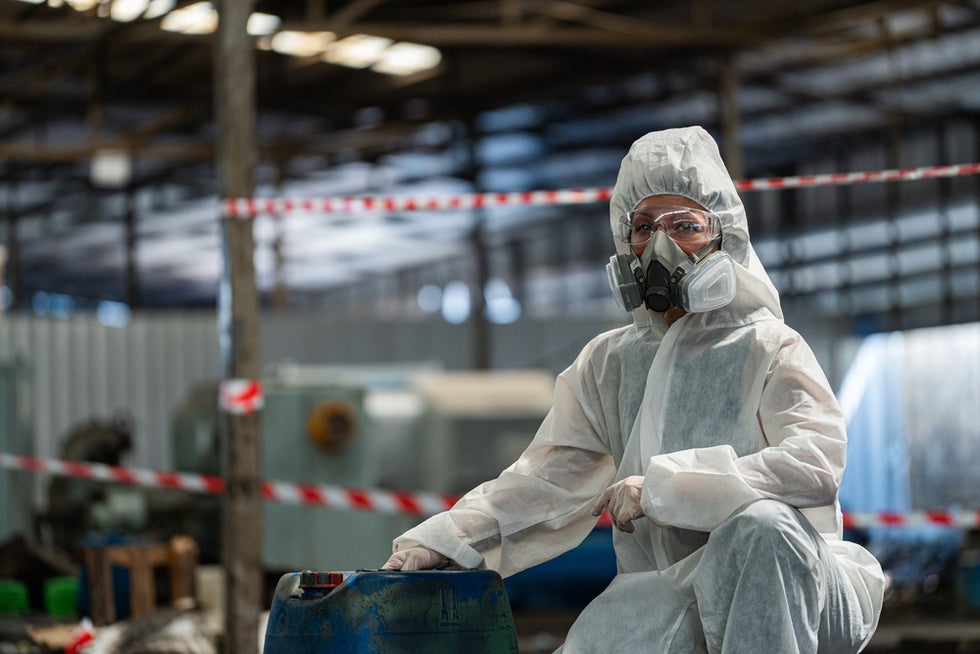
Eleven workers were transported to hospitals after a chemical leak at the POM Wonderful food processing plant in Del Rey, Fresno County, on November 8, 2026. Emergency personnel evaluated 58 employees, and approximately 150 workers were evacuated from two buildings. The incident raises important questions about industrial chemical exposure, equipment maintenance, and the different forms of compensation California law makes available for injuries suffered on the job.
A workplace accident involving numerous employees does not, by itself, establish that a business violated safety regulations or that any particular worker suffered a permanent injury. Those questions require evidence. It is equally important to distinguish a workers' compensation claim against an employer's insurance coverage from a civil claim against an outside party whose negligence or defective product may have contributed to the incident.
What Is Known About the Del Rey Chemical Leak
According to reporting by ABC30 and the Mid Valley Times, the chemical was BioSide, a cleaning and sanitizing solution containing 15% peracetic acid. A report POM Wonderful filed with California emergency authorities described approximately one gallon escaping through a small opening in a transfer line connected to a chemical container outside the plant. The liquid reportedly reached wet asphalt, and employees in the affected area reported difficulty breathing and lightheadedness.
The transfer line's condition has become an important part of the public account. POM Wonderful reportedly suspected wear and tear, while another news account described an issue involving a hose clamp. Neither account establishes a final, independently verified cause. The available information therefore does not support attributing the leak to negligent maintenance, an equipment defect, or the conduct of an outside contractor.
Fire crews and other local agencies responded, conducted air monitoring, and lifted the evacuations after determining that the immediate danger had passed. POM Wonderful reported that the line was repaired and the area washed down before workers returned. The company characterized the reported health effects as minor. Fire officials, however, had not provided a medical outcome for the 11 employees taken to hospitals as of the latest reporting on November 11.
There is also a meaningful distinction between being transported to a hospital and being formally admitted for inpatient treatment. The available reporting establishes 11 hospital transports, not 11 confirmed inpatient admissions. Nor does the emergency response alone establish whether any employee has a long-term respiratory condition.
Why Peracetic Acid Exposure Matters
Peracetic acid is used as an antimicrobial agent in food and beverage processing. The National Institute for Occupational Safety and Health (NIOSH) identifies acute exposure as a potential source of irritation to the eyes, skin, and respiratory tract. Depending on exposure conditions, workers may experience coughing, burning or irritated eyes, chest discomfort, or difficulty breathing.
The medical significance of a chemical release cannot be measured solely by the amount of liquid that escaped. Air movement, ventilation, the concentration of the solution, how the substance was dispersed, and the time workers spent near the release can influence potential exposure. In a later injury claim, treatment records and any available exposure measurements would matter more than assumptions drawn from the reported volume of the spill.
Some workers may experience temporary symptoms that resolve after treatment. Others may require follow-up evaluation if respiratory complaints persist. At present, the public record does not establish that the POM Wonderful workers experienced permanent impairment, and it would be premature to characterize their injuries as catastrophic.
California's Workplace Safety Requirements
California's occupational safety rules require employers to address hazards associated with chemicals used at work. Under Title 8, California Code of Regulations, Section 5194, the Hazard Communication Standard generally requires covered employers to maintain a chemical hazard communication program, provide applicable safety data sheets and warnings, and train employees regarding substances they may encounter during normal operations or foreseeable emergencies.
Section 3203 also requires employers to establish and maintain an Injury and Illness Prevention Program. Among its central purposes are identifying workplace hazards, investigating injuries or illnesses, correcting unsafe conditions, and communicating safety information to employees. In an industrial chemical release, the relevant evidence may include inspection schedules, prior repairs, transfer-line specifications, training records, and emergency response procedures.
The fact that a leak occurred does not prove a regulatory violation. A safety investigation must determine what standards applied, what the employer knew or reasonably should have known, and whether the required precautions were followed. Under Cal/OSHA's reporting rules, certain serious work-connected injuries must be reported promptly. Transportation to an emergency department alone does not prove that an employee met the definition of a reportable serious injury, which can include inpatient hospitalization for treatment rather than observation or diagnostic testing alone.
Workers' Compensation for Employees Exposed to Chemicals
For most employees injured during the course of employment, California workers' compensation benefits are the initial means of obtaining medical care and wage-related benefits. This is generally a no-fault system. An employee does not ordinarily need to prove the employer was negligent to receive benefits for a covered work-related injury or illness.
When warranted by the medical evidence, those benefits may pay for reasonable and necessary medical treatment, provide temporary disability payments during qualifying periods away from work, and provide permanent disability benefits if an occupational injury leaves lasting impairment. Other benefits may apply if statutory eligibility requirements are met. What an individual employee receives depends on the actual diagnosis, work restrictions, treatment, and applicable benefits rules.
The system has limits. Ordinary workers' compensation benefits do not include civil damages for pain, suffering, or loss of enjoyment of life. This distinction can become significant when a worker sustains a severe injury that affects employment and daily activities for years. Still, medical care and other qualifying benefits can be available through workers' compensation even where there is no viable lawsuit against a separate business.
When a Chemical Leak May Support a Third-Party Lawsuit
California Labor Code Section 3602 generally makes workers' compensation the exclusive remedy against an employer for a covered workplace injury, subject to narrow statutory exceptions. Whether an employee can bring a lawsuit against an employer is therefore a different question from whether an outside company can be held liable for causing the accident.
Under Labor Code Section 3852, an injured employee may pursue damages against a legally responsible person or company other than the employer. These third-party work injury claims can arise when an outside maintenance contractor negligently services equipment, when a separate business creates a dangerous condition, or when a product defect causes an industrial accident. The identity of the parties and their respective legal duties are critical.
One possible theory in a chemical release would involve a defective piece of workplace equipment. If a transfer line or component failed because it was improperly manufactured or defectively designed, a manufacturer or another entity in the product's distribution chain could potentially face a products-liability claim. Evidence of wear alone, however, is not proof of a manufacturing defect. Ordinary deterioration, installation practices, maintenance, and product design are distinct issues that must be evaluated separately.
An outside service contractor might also face a negligence claim if it performed work that caused or contributed to the release. In some circumstances, inadequate warnings associated with a chemical product may be relevant as well. None of these possibilities establishes that an outside company was responsible for the POM Wonderful incident. The known facts do not yet identify a legally responsible third party.
What Compensation Could a Third-Party Claim Provide?
When a civil claim is legally supportable, compensation for a serious work injury may extend beyond the categories available through workers' compensation. A successful plaintiff may recover proven past and future medical expenses, lost earnings, diminished earning capacity, and noneconomic damages for physical pain, mental suffering, and loss of enjoyment of life. The extent of recovery depends on the injuries, causation, available evidence, and applicable California law.
In a chemical exposure case, the medical evidence is particularly important. A worker who recovers promptly after short-term irritation presents a different damages picture from a worker whose medically established respiratory condition requires continuing care or restricts future employment. Neither a large emergency response nor a hospital visit provides an automatic basis for a particular settlement amount.
California law permits workers' compensation and an appropriate third-party personal injury action to proceed from the same workplace event. However, an employer or workers' compensation insurer may have statutory reimbursement or credit rights related to benefits paid, which can affect the worker's net recovery. The relationship between the two claims must therefore be accounted for when evaluating potential compensation.
Multiple Injured Workers Do Not Necessarily Mean One Lawsuit
A single chemical release may create common questions concerning equipment history, inspections, emergency procedures, and how the substance entered the work area. But each employee's exposure, symptoms, treatment, and resulting losses may differ. The existence of 58 medical evaluations does not mean that 58 employees have equivalent injuries, or even that all have a compensable civil claim.
Nor does an incident involving many workers automatically become a class action. Individual personal injury claims often turn on individualized proof of medical causation and damages, even when the underlying accident was shared. A common factual investigation can be relevant to numerous workers while leaving those individual issues unresolved.
What Remains Unanswered About the POM Wonderful Incident
The available reporting confirms the date, location, chemical involved, number of workers evaluated, hospital transports, and evacuation. It does not definitively establish why the transfer line leaked, whether any safety rule was violated, whether a separate contractor or product manufacturer contributed to the incident, or whether the transported employees sustained lasting injuries.
Those distinctions are central to the legal analysis. Workers' compensation generally addresses occupational injuries without requiring proof of employer fault. A civil lawsuit seeking broader compensation depends on proof of a legally responsible defendant, causation, and damages. Until the cause of the equipment failure and the employees' medical outcomes are better established, it would be speculative to assign civil liability or place a value on claims arising from the Del Rey chemical leak.


Comments
There are no comments for this post. Be the first and Add your Comment below.
Leave a Comment